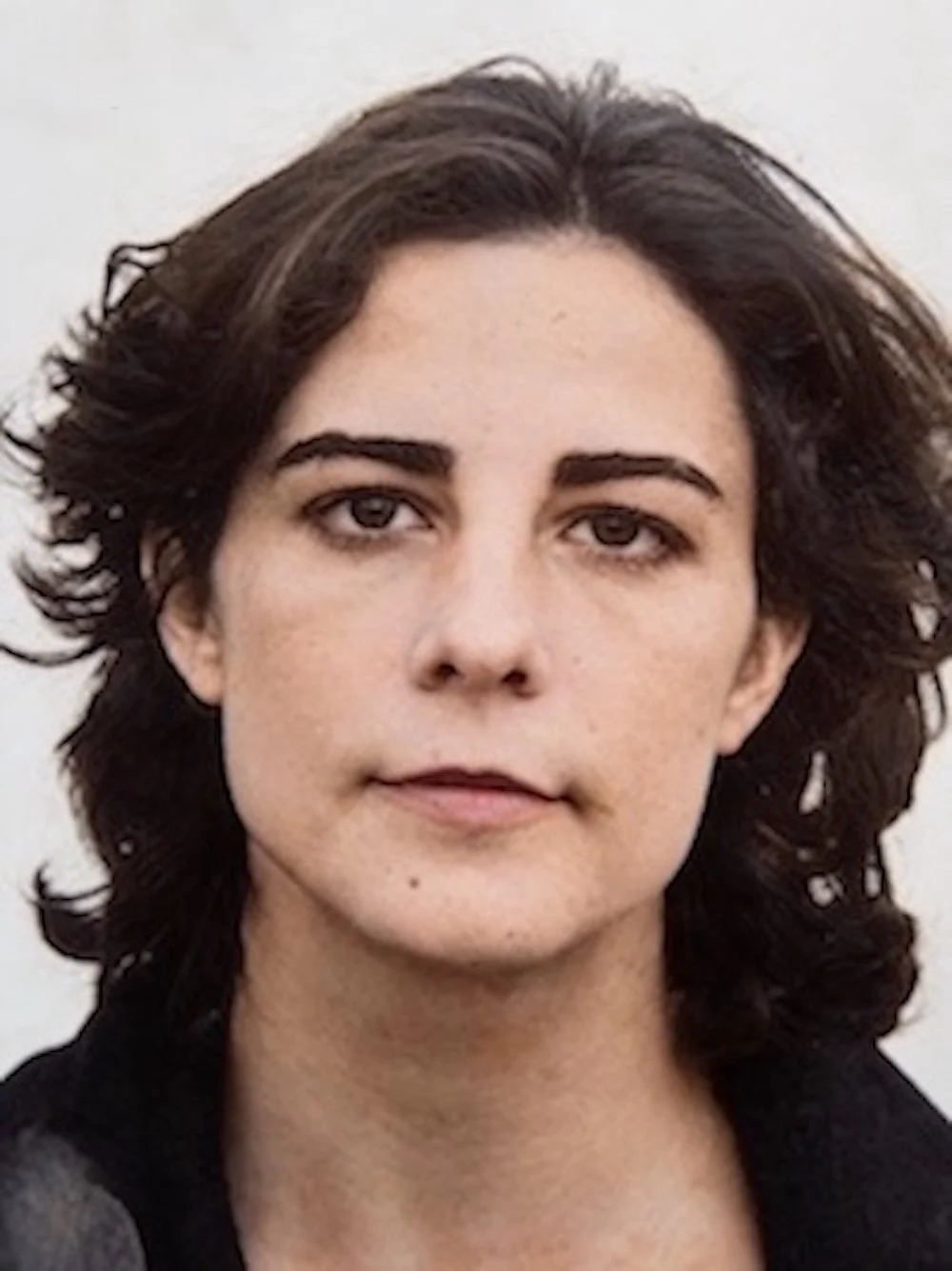
Olga Tzikouli is a Berlin-based artist working in figurative oil painting and digital geometric art. The geometric language at the center of her work has been present since her early twenties — taking form most recently as the Codex Geometries, developed alongside a long-standing practice as a professional dancer and later as a teacher of somatic and bodywork practices — training that continues to shape how she works: through breath, gravity, and presence rather than a fixed idea.
The Codex Geometries are where the underlying language first takes form — intuitive geometric works arrived at through process rather than plan. The paintings carry that language into figurative embodiment, though the relation between the two is not a straight line: the geometric surfaces, dissolves, and resurfaces across the work without moving in a single direction.
Her foundational language was forged in dance, where the body learned precision through breath and gravity. That internal architecture remains: the same awareness that once lived on stage now inhabits the canvas. The stage shifted.
Process
Each work begins without a predetermined concept. The Codexes arrive while working — the image emerges, and the moment evaluation enters, the flow stops. I return only when empty again. The work is finished not when I decide it is, but when I feel it complete.
The paintings follow the same logic: the figure and the surrounding space remain in flux until a balance is achieved that wasn't planned but recognized.